


Just Breathe - My favorite breaths for when I'm pissed off, stressed out, or feeling anxious.
So, the yoga teacher is telling you to just breathe. What a cliche! Yes, indeed, but breathing is truly that important. Beyond keeping us alive, it is a highly effective way to regulate our nervous system, energy level, and mood.
We're always breathing, but did you know, many of us are chronically shallow breathers? Ok, but why do we care?
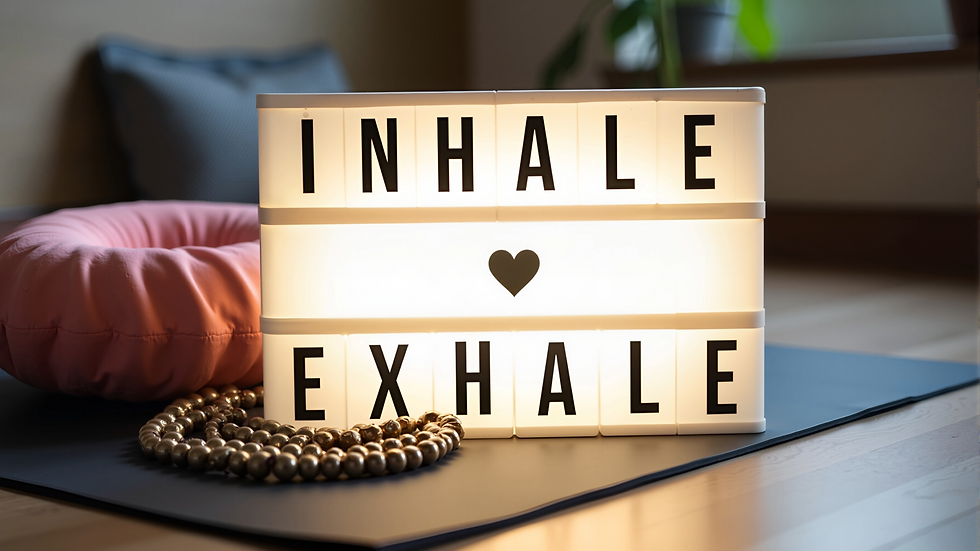
Shallow breaths are a natural reaction for bodies experiencing stress. When we are shocked, scared, or anxious, we are more likely to resort to quick, shallow breaths as well as holding our breath. Society, too, has trained many of us to "suck in that gut", leading over time to a tendency toward shallower breathing.
Chronic shallow breathing has critical health and longevity implications. Because we breathe shallow in response to stress, our body associates shallow breathing with other stress reactions. Over time, shallow breathing becomes a habit, and we inadvertently put ourselves into a fight-or-flight state, even during downtime. Shallow breathing over-relies on our chest, neck, and back muscles, creating unnecessary tension and/or headaches and stiffness.
Shallow breathing can impact our immune system, leading to more sick days and worse outcomes for chronic conditions.
Our breath also affects our cognitive functioning. A series of experiments showed that people who breathe through their nose have better memory recall and emotional judgment. Also, stress is a major contributor to risk for developing dementia, including Alzheimer's. Continuing to breathe ourselves into stress can affect our precious brains both today and into our golden years.
Learning to control your breath (called pranayama in yoga) could turn out to be one of the most powerful tools in your arsenal. A breath that centers and grounds you could mean the difference between blowing up at your coworker or having a calmer, more constructive conversation. Breathing can help you wake up and refocus when that afternoon energy slump attacks. Breaths that trigger your parasympathetic nervous system (your body's rest and reset button) can help calm your nerves before a big presentation and/or help you fall back to sleep if you're up and thinking too hard at 3 am.
There's a breath for just about every scenario, but today let's focus on breaths that calm. Here are my personal favorites.

Diaphragmatic Breathing (Belly Breaths)
This is a simple breath that uses all the parts of your breathing system. Deeper breaths, utilizing your diaphragm, can lower blood pressure, relax muscles, decrease stress, lower your heart rate, and boost your energy.
HOW: Either sitting comfortably or lying on your back, place one or both hands on your belly. Inhale through your nose, into your belly first, and allow it to expand outward. Feel the breath continue to fill you up at your ribs and chest. As you exhal,e feel your stomach move back in. Option to exhale through your nose or open mouth. Sometimes it feels nice to sigh it out. I recommend doing this for at least 30 seconds. Over time, you might notice it's easier to choose this breath as your default.
Focus on slowing things down on both the inhale and the exhale. No need to inhale til you feel you're going to pop. Let the inhales and exhales feel full and big, but not straining.
(Note, if you're really enraged, go somewhere with sound insulation (the car works) and make a lot of noise on the exhale. Maybe you even scream a few times and then do those big belly breaths.)
Why I love it: You can do this anywhere and at any time, and no one will be the wiser.

Box Breathing (Square Breathing)
Did you know that Navy Seals regularly utilize this breath when navigating their high-stress roles? This breath takes advantage of slowing the breathing rate down as well as shifting our mental focus to counting and noticing our breath, which enhances the calming effects.
Think of a square. Choose a number (4 is good for starters), and then Inhale for 4, suspend your breath for 4, exhale for 4, suspend your breath out for 4. Repeat. 3 - 4 minutes is a great goal, but even 30 - 40 seconds can help send your nervous system into the calm direction. Again, the intention is to calm vs strain, so choose a number that gives you a full and deep breath while being able to sustain each phase of the breath without struggle.
Why I love it: It's easy to remember, works great, and you can do it anytime, anywhere.

Left Nostril Breathing
Fun human fact: We swap which nostril is the dominant breather multiple times per day. Another fun fact: when we breathe through the right nostril, it can wake and rev us up. When the left side is dominant, it calms us. Final fun fact: lying on our right side can trigger left nostril dominance and help us fall asleep faster.
HOW: Cover your right nostril with a finger or thumb and breathe slowly in and out through the left. Start with 30 seconds.
Why I love it: I like this one in traffic, and when I'm winding down for bed. It is simple and quickly effective.
There are many more breaths out there, but these three are absolutely wonderful for bringing the calm on quickly. Give one or all of them a try and see if you notice a shift. I'd love to hear about it too. Comment here or message me directly.
If you'd like to dedicate a little more time to breathing, as well as focusing in on your goals for the new year ahead, join me on December 20th for a Winter Solstice Celebration workshop. We will breathe (of course), enjoy so gentle movement, and experience a guided meditation to give you some clarity and insight on your goals and path forward into 2026. Sign up here to reserve your spot.
I hope you found this helpful, friends. And remember, when life gets stressful, remember to breathe.


Comments