


How to Return to Your Center

Well, it finally happened to me. My Saturday morning yoga class was porno-bombed. Not by one, but two participants (possibly the same human).
It was what you’re probably imagining. There were visuals and sound. They repeated the offense multiple times, I locked the class, reported them to all entities I could, and am taking future measures to prevent a repeat. I’m grateful to my students who were there to take a yoga class, and again, I am sorry you were subjected to that.
In the grand scheme of things, this is a minor blip. In the moment, and for a little while afterwards, I felt a bit rattled. It occupied my thoughts and left me irritated and offended, both for myself and the other students. Soon, though, I realized that by allowing the incident to continue on in my head and affect my morning, I was giving that individual much more power and time than they deserved. And I used my frustration as inspiration to theme my next class later that morning. I even shared the story with them, similar to how I’m sharing it with you. Perhaps it will inspire you, too, the next time you find yourself needing to return to your center.
It also got me thinking about the art of coming back to one’s center. I say “art” because what helps us get back to center can be very subjective, varying both in the unique situation and the unique individual in the situation. It’s also a work of art in that it’s a practice. Just like we practice drawing to become good at drawing, so too do we need to practice coming back to our center.
So how can we come back to our center when life knocks us off balance? Let’s explore…
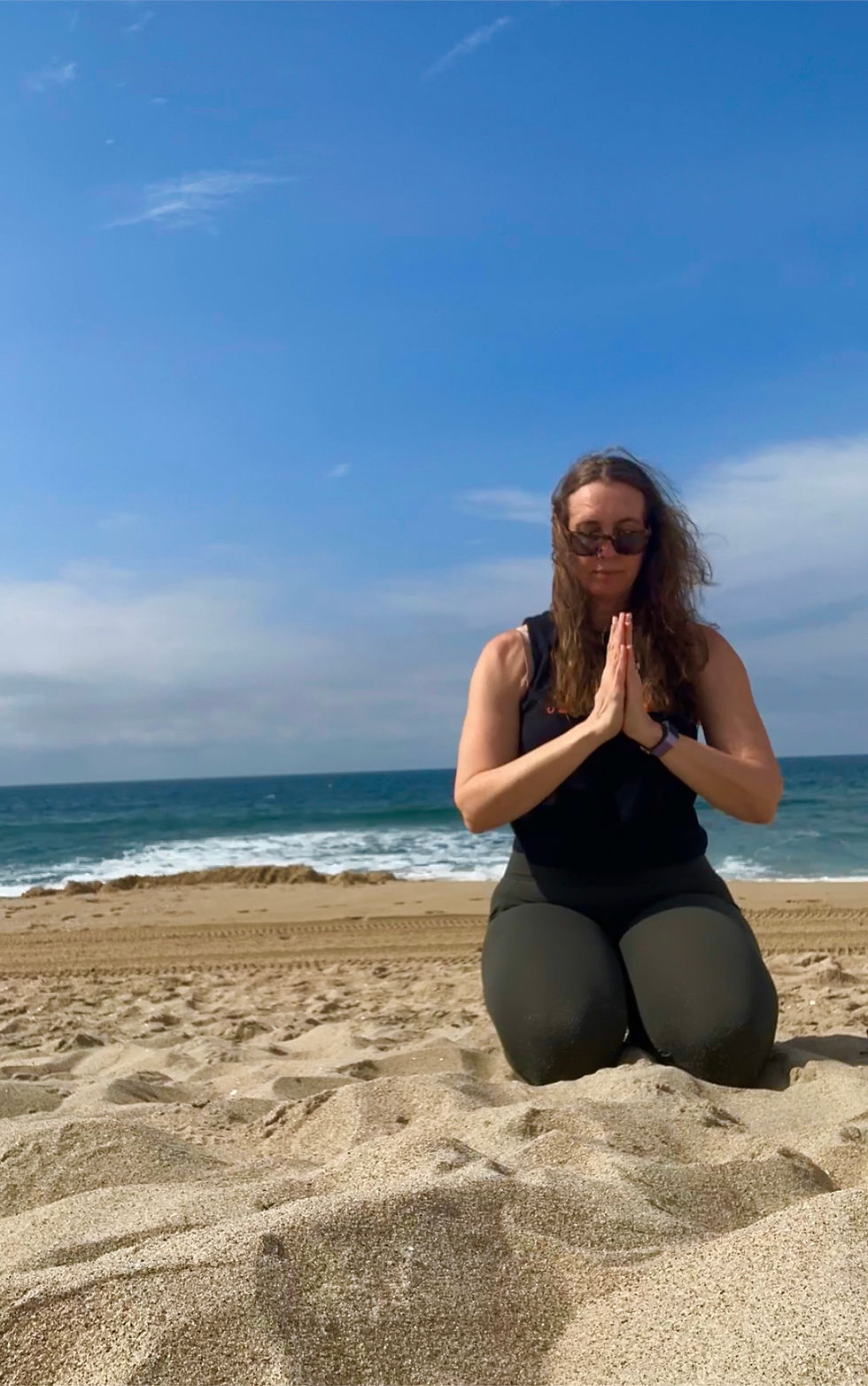
Practice recognizing when you’re OFF
There are always signs. One of my favorite things about the human body is that it is always giving us feedback. Sometimes it’s obvious (I feel severe pain when I touch the hot stove) and sometimes not so much (like a stomach ache when I didn’t eat anything unusual or a vague sense of restlessness, “I need to move but don’t know why” feeling).
The more we pause, step back, and really listen to the sensations in our physical body, notice the general pattern and sentiment of the thoughts running through our heads, the more we get to discover the root cause of being knocked off center. As they say, knowing is ½ the battle. The more we can recognize what “off” looks and feels like, the better equipped we become to resolve and prevent being knocked off our rocker going forward.
This process can be a bit of a journey. At least it has been for me. I spent years trying to stuff and hide what my body was telling me. I numbed myself with drugs and alcohol, ignored physical pain to the point of long-term damage, and spent years believing the demeaning thoughts bubbling up in my brain about my worth and power. Thankfully, I've learned to find safety and comfort in being present with and listening to myself.
So how can we practice listening to ourselves? Here are 2 ideas to try that have helped me and many of my students/clients.
Slow down and stop the second you notice a change. The second you feel your blood start to boil over or have tears well up in your eyes, a twinge of pain in your shoulder, or even simple boredom, stop and ask yourself why. It might be obvious, it might take a little reflection, but every time you stop and think about what you’re feeling and thinking, you’re practicing listening to yourself.
You might start to notice interesting things. At some point, I discovered that I get anxious, start to experience profuse and stinky sweat, drive extra aggressively, and hate all people and things around me when I’m running late. It’s taught me to get better about leaving earlier than I think I need to and building systems to get out the door with less friction and stress.
Give it a try...
Take a moment and notice how you’re feeling right now. What mood are you in? How do you feel physically? What words are you using as you assess these things? Taking a few minutes to journal how you’re doing, especially when you’re feeling triggered, can be very insightful. I invite you to write it down when you’re mad, sad, etc. Or perhaps you try writing for 2 - 3 minutes every evening to quickly recap your day. You can keep it broad or specific, like journaling how you feel physically after each meal or workout.
Moving with intention. We all have this amazing ability to move without putting a lot of thought into it. You are breathing while reading this, and probably weren’t thinking about it until I said something. The same probably goes for walking around your house. That’s great for us to pull off complex tasks, but we aren’t as connected in mind, body, and spirit.
What makes movement intentional is proprioception - perception or awareness of your body’s position and movement in space. Not just that you placed your foot on the ground, but you’re aware of where it is relative to the rest of your body and the surrounding environment. It’s a way to get more in tune with your body and the subtle ways it exists physically. This is part of the secret sauce for getting more skilled at physical movements or sports. For example, stronger proprioception helps a gymnast engage a certain muscle to land more accurately. It is also what keeps us from slamming into the doorframe when we walk into a room. (If you accidentally bump into doorways and corners a lot, this could be a great practice for you. I used to run into them and even bruise. Not very often these days.)
My proprioception has vastly improved from my yoga practice. Mostly, because we spend a lot of time picking small areas to tune into.
Give it a try...
Take a moment and place your hands on your belly. Take a deep breath in and send the air down into your belly first. Make it expand and grow big. Feel it decompress and release as you exhale. Repeat a few times. Notice how aware you are of your breathing and your belly area. Now take a deep breath in to only your chest. Keep your belly sucked in. Notice the difference in how it feels to breathe each way. Does one feel better than the other? Congratulations, you’re practicing proprioception.
How do you currently cope when life throws you curveballs?
Because you are an amazing human, you have already adopted several mechanisms for dealing with feeling “off”. What do you do if you suddenly receive bad news? Call someone? Go for a walk? Pour a stiff drink? Blame yourself or anyone but yourself?
You probably have some great tools you utilize regularly without even realizing it. You might also have some tools that maybe aren’t as helpful as you think they are. Or they used to work great, and now they don’t.
Give it a try
I invite you to take a moment and reflect, or write about it. Think of the last time you felt angry, anxious, sad, overwhelmed, etc. What is the first thing you want to do? This exercise can be ongoing, like practicing listening to your body.
Next, make 2 lists. First, the actions you take that you know are effective at helping you (yoga, breathing, a glass of water, call someone). Second, a list of the actions you take that you know either aren’t helpful at all, or feel helpful for a moment but ultimately don’t, or make things worse (overindulging in something like alcohol, food, etc., punching a hole in the wall, screaming in someone’s face). The first list is a reminder that you do have tools in your toolbox for times of stress. The second list is also a reminder that sometimes you tend to react with something that ends up hurting you. It’s also an opportunity. You’ll begin to become more aware of what triggers you to react with actions that don’t serve you. Then you can choose to actively practice replacing those old actions with new ones that are more effective and helpful. For example, long, long ago, and with great effort, I replaced smoking a cigarette when I received irritating news at work with taking a few walking laps around the building instead.
Need some replacement ideas?
get outside in nature
deep breaths
phone a friend
pet a dog and/or cat
exercise/movement
drink a big glass of water
write it out
change the scenery - leave the room and take a pause, even if just for a moment
hug someone (pets count too)
do something you enjoy - make some art, listen to your favorite song
Allow your feelings to be full and real, and work through them
The icky feelings are just as much a part of the human experience as the good ones. We need to feel them, or they really do linger (like that perv in my yoga class staying in my thoughts once class ended).
We often either stuff crappy feelings away, which can lead to pent-up stress and disease, or we wallow in the ick and allow it to take over. Very human of us, but not always beneficial.
I hear you that some feelings are not fun to feel. But did you know that most feelings only last about 90 seconds? Yep, it’s true. When something triggers an emotion, your body releases a wave of neurochemicals. Most clear within 90 seconds, if nothing re-triggers that feeling. (Some last longer, such as shame and fear, with grief lasting the longest. But the same general principles apply.)
Why do we feel things for longer? It depends on our thoughts. Research shows that emotions have a distinct temporal profile in the brain, not a universal duration. Rumination is the biggest predictor of how long we feel something. The more we “revisit” the story, the longer the emotion remains active. We can effectively re-trigger ourselves with our thoughts alone.
A feeling in the body is like a wave — about 90 seconds long. What makes it last is the mind picking the wave back up. If you stay with sensation instead of story, the wave completes.
So, if we focus on the physical sensations of the feelings instead of spending time building stories and making memories about them, we can process them more quickly and effectively.
Give it a try
Instead, I invite you to try the following: The next time you feel charged, find a safe place and moment to really get into it. Maybe write about it or move your body a bit to allow the energy of the feelings to move and flow. Then allow yourself to feel the feeling to the fullest extent possible. Feel it in your mind and every cell in your body. Feel it with all your might until you feel it start to dissipate. Feeling one might be replaced with a new icky feeling, feeling 2. Rinse and repeat until you notice an absence of those intense feelings.
You might want to scream, cry, or laugh. Let yourself. Get your body involved, too. Move, shake, stomp, wale. Sounds kinda wild, but I’m telling you it gets the ick through you and out of you. Staying in the physical sensation can help you ride the wave and release in that 90-second window. Focusing on feeling the physicality of the feeling distracts the brain from creating meaning, memories, and interpretations that might keep you endlessly spinning in your mind.
This is one of the greatest tools I’ve learned during my therapy tenure. It’s helped me through minor frustrations and severe loss and grief.
Another way to not get “stuck” in the ick is to simply set a timer. Write it out, get worked up, feel the feelings, scream, cry, and beat up a pillow for 5/10 minutes. Tell yourself to go big. When the timer goes off. Tell yourself it’s time to move on, at least for the moment. You might not be “over it”, but I bet you’ll have cleared some space and calmed down.
Additional notes: Again, create a private, safe space. I find a sound dampener, like a sweatshirt or a pillow, can help muffle noise. I would also recommend doing this when you’re home alone or sitting in your car. If you don’t feel comfortable doing this practice alone, get some help from a therapist, coach, or healer. They can help create a safe environment to process your emotions and give you actionable support and guidance to move forward after you release. Speaking of support, you might feel a little tired or drained. That’s also normal, give yourself a little extra care, kindness and rest, as best you can.
Get honest - Is this worth your time and energy?
Your amazing brain loves to think, and it might want to dredge up and analyze whatever knocked you off balance. If you’re evaluating to learn and move forward, great. If you're staying with these thoughts and it’s messing up your whole mood and day, the main person suffering is probably you. Even if the cause of said suffering exited the scene hours ago. Some things are just not worth your time and energy. It might help to ask yourself if the person or thing that set you off deserves that much prime real estate in your head.
Action is empowerment
Logical action vs flagrant reaction. If there is something you can do about your situation that doesn’t harm others, it can be calming to do it. In my example, I reported the person/people who violated our safe class space to both Zoom and Eventbrite. I also learned all the different tools I can use during meetings, and have a new strategy regarding free offerings.
Action can also look like managing your feelings (see above) or taking a moment to understand what happened and how you could perhaps prevent it from happening again, or learn for the future.
A final action is acceptance. Not accepting that you deserve what happened or that life is out to get you. I mean, accepting that this happened. Here we are. Full acceptance of what is allows us to be clear about what should come next, like what empowering actions you can take or acknowledging that it happened, it’s over, you survived, and it’s ok now to let it go.
Go back to basic self-care.
I don’t just mean bubble baths (although, sure, go ahead). I mean, hydration, sleep, supportive movement, nourishing foods, and connecting to other humans/pets. Doing the fundamental things to fill your cup, especially in periods of prolonged stress, will do wonders for keeping you healthy and making it through the moment. During some of my most profound periods of loss (like the death of my mom, my stepdad, and my dog), it was the simple things, like showering, drinking herbal tea, getting on my yoga mat, and spending time with loved ones, that held me together when everything else had shattered.
Life is going to life, so how do you come back to your center? I would love to hear your thoughts on what does and doesn’t work for you. Comment below or send me an email.
And if you would like to tap deeper into harnessing your proprioception and practicing ways to calm and center yourself physically, join me on the mat:
ONLINE:
Wednesdays 5:30 - 6:30 pm Pacific
Saturdays 9:00 - 10:00 am Pacific
IN-STUDIO (CorePower Yoga in Marina Del Rey)
Wednesdays 9:00 am and 11:00 am Pacific
Thursdays 2:00 pm and 4:00 pm Pacific
Comments